How to Make a Vision Board You Will Actually Keep Using
What to put on it, where to keep it, and the five-minute weekly habit that stops your board from turning into wallpaper.
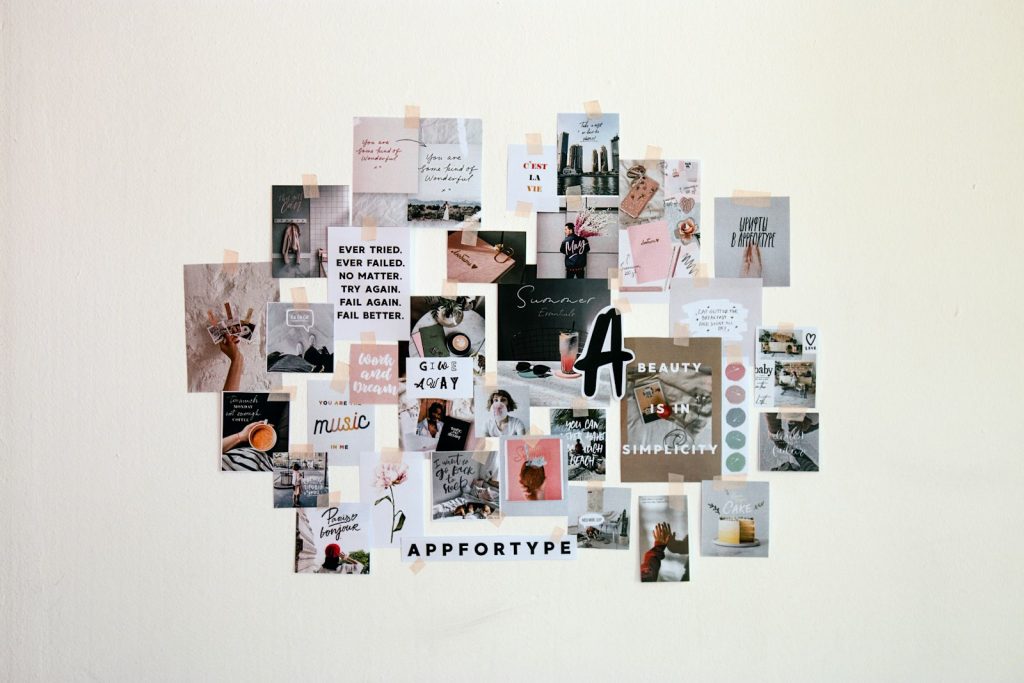
Most vision boards have a short life. You make one on a hopeful Sunday afternoon, pin it to the wall, feel great for a week, and then it quietly becomes part of the furniture. A month later you walk past it without seeing it.
The problem is rarely the board. It is how it was made and what happens after. A board you keep using is built a little differently: it is specific, it is honest about where you are now, and it has a small routine attached to it. Here is how to make that kind.
Step 1: Decide what the board is for
Before you cut or drag a single picture, finish this sentence: “By this time next year, I want…”
Write three to five answers. Not twenty. A board that tries to hold everything you have ever wanted ends up saying nothing. A few clear goals give your eye somewhere to land.
Good answers are concrete enough that you could tell a friend whether you got there:
- “Have $5,000 in an emergency fund” rather than “be better with money”
- “Walk 30 minutes, five mornings a week” rather than “get healthy”
- “Take a trip to Portugal with my sister” rather than “travel more”
Vague goals are not wrong, they are just hard to picture. And picturing is the whole point.
Step 2: Mix three kinds of pieces
A board made only of glossy magazine photos can feel like someone else’s life. A board made only of words can feel like a to-do list. The ones that last tend to mix three things:
1. The picture of the result
This is the image of the goal finished: the kitchen, the beach, the finish line, the bank balance. Use your own photos where you can. A picture of your actual street, your actual dog or the actual trail you want to run makes the goal feel close rather than borrowed.
2. The words that explain why
Next to each picture, add a few words about why it matters. “Debt free” is fine. “Debt free so I can say yes to things again” is better. The reason is what pulls you back to the board on a hard day.
3. One small action
For each goal, add the next step that is small enough to do this week. “Open a separate savings account.” “Lay out walking shoes by the door.” It feels unglamorous, but it is the piece that turns a board from a wish into a plan.
A good vision board shows where you are going and the very next step to get there.
Step 3: Build it where you will see it
A paper board on a wall you pass ten times a day will get more attention than a beautiful one in a drawer. Think about where your eyes already go:
- Beside the bathroom mirror or on the inside of a wardrobe door
- Above your desk or next to your computer screen
- On the fridge, where you go every morning anyway
- As your phone or laptop wallpaper, which you see constantly without trying
You can make a digital board with our free vision board maker: add your own words and photos, drag them into a collage, and keep it open on your phone or computer. Many people make one digital board and one small printed copy.
Step 4: Leave room
Do not fill every corner. A board with a little empty space looks calmer and gives you somewhere to add things as the year changes. Goals shift. New ones appear. A board with room to grow is one you will keep updating instead of replacing.
Step 5: Add a five-minute weekly check-in
This is the part most people skip, and it is the part that matters most. Once a week, at the same time, spend five minutes with your board:
- Look at each goal for a moment. Picture it done. Notice how that feels.
- Ask one question: “What did I do this week that moved this forward?” Even a tiny answer counts.
- Update the next step. If you opened the savings account, the next step might be setting up an automatic transfer.
- Move or remove anything that no longer fits. Letting go of a goal on purpose is progress too.
Sunday evening and Monday morning are popular times because they frame the week ahead. Pick whichever you will actually keep.
Common mistakes to avoid
- Too many goals. Pick the few that matter most this year.
- Only pictures of things to buy. Include experiences, habits and people too.
- Making it once and forgetting it. The weekly check-in keeps it alive.
- Copying someone else’s board. Inspiration is fine, but your board should look like your life.
Your board, this week
You do not need scissors, glue or a free afternoon to start. Write down three goals, find one picture and one sentence of “why” for each, and add a small next step. That is a complete vision board. You can make it prettier later.
When you are ready, open the vision board maker and pin your first goal. Then put a five-minute reminder in your calendar for next week. That reminder is the difference between a board you made and a board you use.